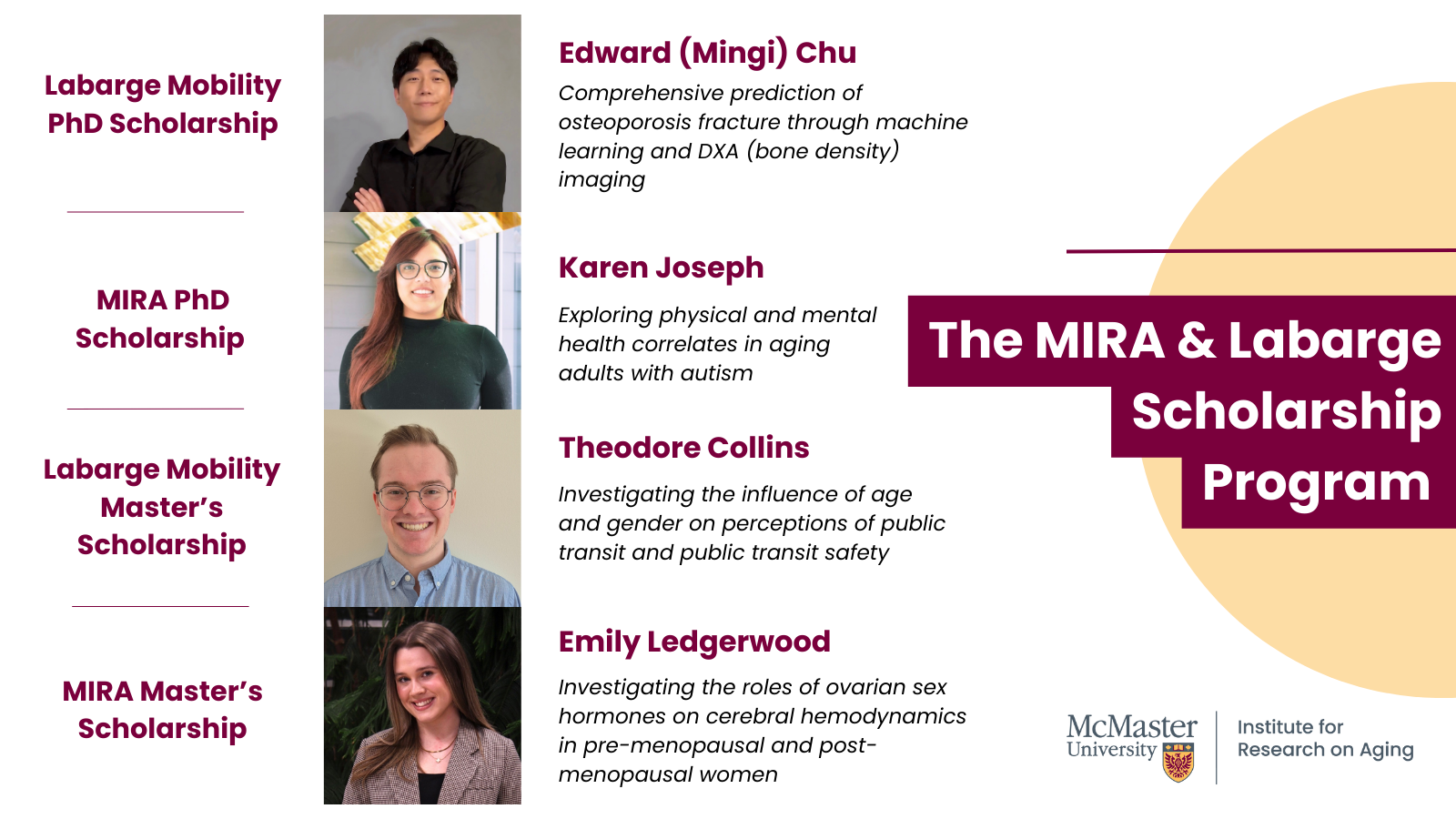
Comprehensive prediction of osteoporosis fracture through machine learning and DXA (bone density) imaging


2025 | Labarge Mobility PhD Scholarship
Awarded to: Edward Chu, Biomedical Engineering, Faculty of Engineering
Supervisor: Cheryl Quenneville, Mechanical Engineering, Faculty of Engineering
Summary
Osteoporosis is a common condition in older adults, silently weakening bones and increasing their susceptibility to fractures. The onset of the disease often remains unnoticed until a debilitating fracture occurs, particularly in critical areas like the hip and spine. Currently, the primary diagnostic method for osteoporosis is Bone Mineral Density (BMD) measurement using Dual-energy X-ray Absorptiometry (DXA). However, BMD alone has proven insufficient for accurately predicting fracture risk.
This project proposes a novel approach to combine machine learning with advanced DXA image analysis, creating a more comprehensive tool for fracture prediction. With successive iterations, I aim to use patient characteristics (such as age, sex, and medication history) with DXA images to predict an individual’s five-year risk of experiencing an osteoporotic fracture. This project will feature a large dataset from the Canadian Longitudinal Study on Aging and the Canadian Multi-Centre Osteoporosis Study to train, validate, and test the model.

Related Publications
No related publications to display.