McMaster experts on aging led ‘a fantastic global effort’ to establish core measures and guiding principles for collecting and using wearable device data in older populations.
Original story written by Lisa Polewski, McMaster News
In a recently published paper in Age and Ageing, the McMaster team helped establish minimum standards for using devices like accelerometers and GPS technologies to track how people move in their daily lives. The international group of researchers also set priorities for future research that could transform how we prevent and monitor age-related health challenges.
“Research groups around the world are working in silos measuring health and mobility using wearable tech in vastly different ways, which makes it difficult to compare across studies and limits our overall progress,” says Marla Beauchamp, the paper’s lead author and the head of a cohort study called McMaster Monitoring My Mobility (MacM3), which tracks the everyday mobility of 1,500 people over several years using wearable tech.
When developing wearable protocols for MacM3 and the Canadian Longitudinal Study on Aging (CLSA), Beauchamp and her fellow researchers realized that, when it came to understanding how people move using wearables, the field was essentially a patchwork of devices and methods without a common playbook.
“More and more research studies are using wearables because the data gives us a rare glimpse into someone’s daily activities that we don’t get from questionnaires and lab tests of physical performance,” Beauchamp explains.
The World Health Organization is also touting wearables for its global action plan for physical activity, both for measuring overall population health and helping individuals monitor their movement.
The recent paper was a result of a 2024 meeting, organized by the McMaster Institute for Research on Aging in collaboration with the University of Birmingham, bringing together 24 international experts in aging, mobility, and digital health.
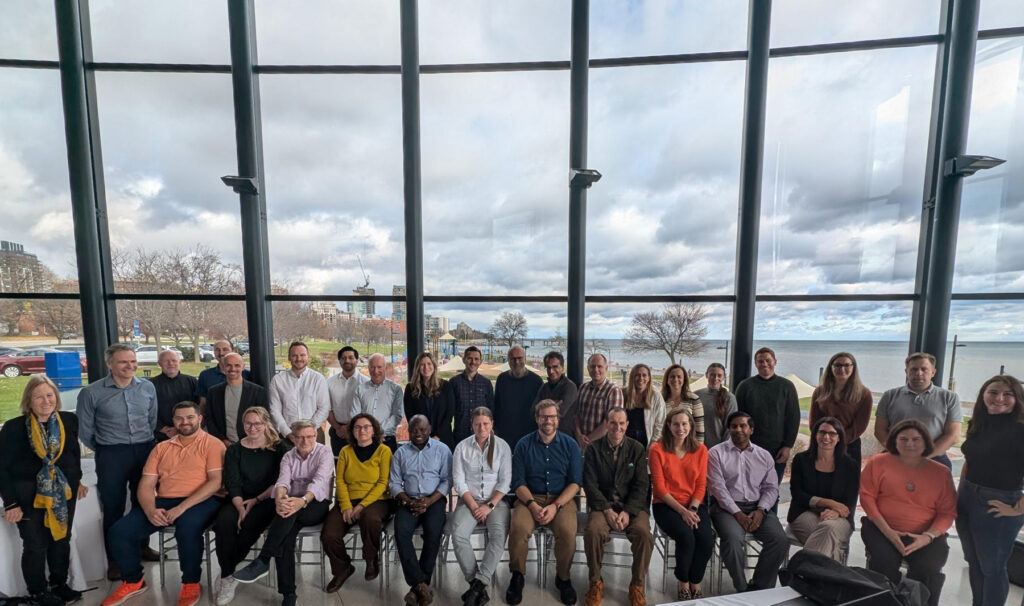
The group reached a consensus on 20 core device-derived mobility measures, as well as 30 guiding principles for how to collect and use this data in older populations.
Researchers were asked to come to consensus on standards for mobility metrics like the location of the wearable on a person’s body, data accessibility, the length of data collection periods, and how the data is processed once it’s been collected.
It was a “fantastic global effort,” Beauchamp says, with everyone committed to reaching consensus during this first-of-its-kind exercise: “I think that it speaks to how strongly people felt that this work needed to happen now.”
McMaster’s leadership in aging and mobility builds upon Canada’s initiative in the field, as the country was an early global leader in integrating wearable-based physical activity measurement into national surveillance. Statistics Canada introduced accelerometer-based measurement in the Canadian Health Measures Survey starting in 2007, and wearables have become even more prevalent in health research over the past two decades.
“The promise of these devices is that they can ultimately allow us to tailor health interventions based on individual needs in a more sophisticated way,” says Beauchamp. “But we still need to do the scientific groundwork to make sure recommendations are grounded in the best available evidence and that measurements are actually valid and reliable.”
She points to the widely circulated belief that adults need to take 10,000 steps each day, saying that target may not be advisable or even technically achievable for older people.
“Wearables have helped us understand how much movement is needed to reduce the risk of different health outcomes, but the picture is much more nuanced than setting one target for everyone to meet.”
The international experts agreed on five key priorities to make wearable technology truly useful for supporting healthy aging:
- Following people over time. Linking wearable data with long-term health outcomes will show how changes in mobility relate to aging and disease.
- Developing digital biomarkers. Measures like walking speed or balance could help detect health issues earlier.
- Adding context to movement. Knowing where and how people move not just how much can deepen our understanding of mobility and health.
- Making technology work for older adults. Algorithms must be validated for people with diverse abilities, not just healthy young adults.
- Integrating wearables into health care. For wearable data to improve care, it needs to fit into clinical workflows in meaningful ways.
Challenges also included a lack of representation from low to middle income countries, as well as concerns about “black box” approaches for processing and analyzing data collected by commercial products.
Establishing these standards for wearable tech is “just the beginning” with much more work needed to move the field forward, Beauchamp says, but the consensus work is already informing discussions with the WHO on global guidance for the measurement and surveillance of physical activity.