By Jay Robb, Faculty of Science for McMaster News
Léa Ravensbergen’s research is creating a more complete picture of transit use – because how we get around in cities “profoundly impacts our quality of life.”

A student in Léa Ravensbergen’s research group came back from a transportation conference feeling vexed.
The student had met two conference-goers who’d never heard of mobility of care. While that bothered the student, Ravensbergen considered it good news.
“Only two people? We’re making progress.”
Four years ago, Ravensbergen’s presentations on mobility of care were met with a sea of blank stares, puzzled looks and indifference. “Why are you talking about this, why are you telling me and why should I care were recurring questions,” says Ravensbergen, a transportation geographer who joined McMaster in 2023.
First coined by urban planning scholar Ines Sánchez de Madariaga, mobility of care refers to all the travel and trips required to look after others and maintain a household. Think grocery shopping, medical and dental appointments, daycare drop-offs and pick-ups and checking in on aging parents and extended family.
Ravensbergen has played a role in moving mobility of care from niche to mainstream within Canadian public transit circles.
Together with Juliette Fournier and Ahmed M. El-Geneidy, Ravensbergen published North America’s first mobility of care research paper in 2021. Their study – “Exploratory Analysis of Mobility of Care in Montreal, Canada” – has been cited 81 times. It’s also been recognized with the 2022 Best Practice Ready Paper Award from the Transport Research Board’s Committee on Women and Gender in Transportation and as one of Transportation Research Record’s most influential and top-trending article from 2022 to 2024.
Their research found that mobility of care accounts for around 30 per cent of daily trips. Most of those trips cover short distances close to home with multiple stops, like getting groceries for dinner before picking up the kids from daycare or school.
“These trips should be quick wins for getting people to take the bus, use bikes or walk,” says Ravensbergen. “But in practice, people tend to drive.”
Part of the issue is that public transit systems are run to meet the needs of Monday to Friday commuters heading to and from work, usually from the suburbs to the heart of the city.
“Right now, many people – especially women from low-income neighbourhoods – use public transit for mobility of care trips even though it’s not convenient or easy because they have no other choice. They deserve better.”
A national project
Ravensbergen is now collaborating with Emily Grisé from the University of Alberta and Geneviève Boisjoly and Martin Trépanier from Polytechnique Montréal on a national research project that’s received a three-year $1,020,000 Alliance grant from the Natural Sciences and Engineering Research Council of Canada. They’re working with 14 transit agencies across Canada to collect data that gives a more accurate and complete picture of who’s using transit, why and when.
Knowing how people use transit is something of a black box at the moment, says Ravensbergen. That’s a problem because flawed data, especially around gender, is driving decision-making and budget-planning.
“It’s important that we make the right decisions because how we move and get around in cities profoundly impacts our quality of life, our healthspans and lifespans,” she says. “Public transit that’s equitable and accessible for all is the backbone of any liveable, sustainable city.”
Ravensbergen says she’ll feel like she’s made a difference as a researcher if, in 10 years, transit agencies are collecting data that fully captures mobility of care trips.
Paratransit ridership
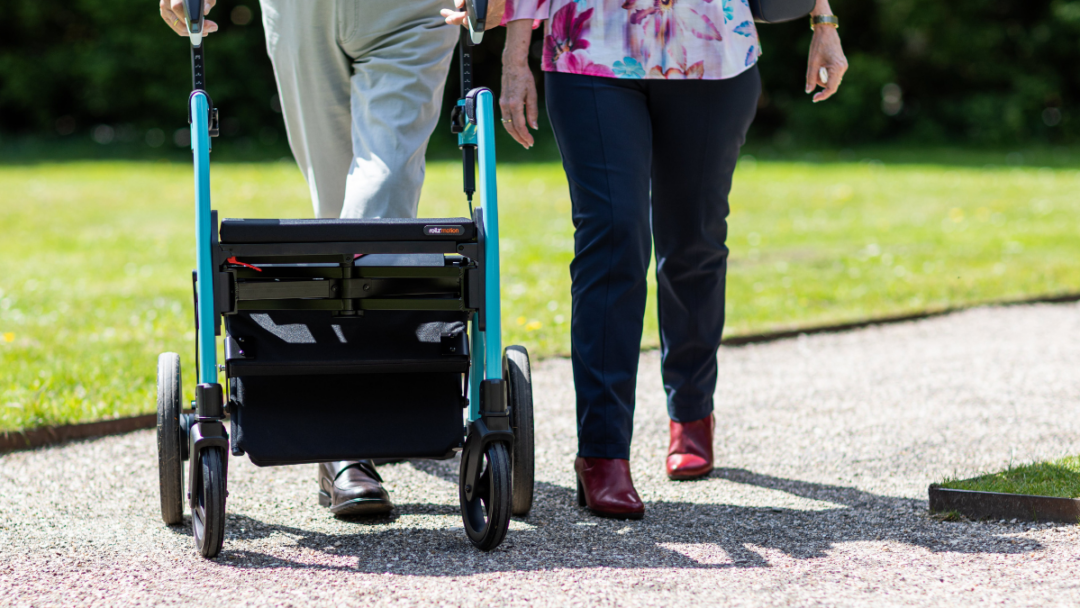
Ravensbergen also wants to make a difference for another group of transit riders. Paratransit offers pre-booked curb-to-curb services for people with physical, functional or cognitive limitations and health conditions who aren’t able to use fixed-route public transit.
“Paratransit isn’t as sexy as bike lanes and light rail transit yet it’s the last safety net for some of the most vulnerable people in our communities – they rely on it for their lives.”
Ravensbergen started researching paratransit and found next to nothing despite it being an essential service.
“Paratransit doesn’t seem to be on researcher’s radar. We know very little about how it’s run, why it runs the way it does and peoples’ experiences with using the service.”
In Hamilton, approximately 17,000 people are registered with the city’s Disabled and Aged Regional Transit System. DARTS provides just under 800,000 trips per year with an urban and rural service area that covers 1,117 square kilometres.
Ridership locally and across the country is expected to increase as Canadians grow older. Seniors already account for 20 per cent of the total population, while people 85 years of age and older are the fastest-growing demographic in Canada.
Despite current and projected demand for paratransit, some cash-strapped municipalities, such as Montréal, are under increasing pressure to scale back the service.
That would be a short-sighted move, says Ravensbergen. “The long-term costs for both individuals and society would far outweigh any immediate savings.” Reducing paratransit service could lead to missed medical appointments, restricted employment opportunities and increased social isolation. “People rely on paratransit to live a good life and have a healthy lifespan,” she says. “It’s their lifeline.”
Investing in transit
To help build the case for investing in paratransit, Ravensbergen and two students from her research group have begun working with the City of Hamilton. Their collaborative project aim to better understand the needs, expectations and experiences of people relying on DARTS.
The students have already organized and run focus groups. “Everyone we’ve met with raves about the drivers. And the people who run DARTS want to provide a good service. The question now is, how can it be made better? We hope our research helps provide some answers.”
Launched by the Office of the Dean, the Profiles in Discovery series is showcasing the assistant and associate professors who represent the future of the research enterprise in McMaster University’s Faculty of Science.